


What I Didn’t Know Until Drop-Off Day
Posted by: Birch Rock Camp
I asked the question at least a dozen times in the weeks before we drove up to Waterford. What actually happens on the first day? I knew the philosophy, had read everything on the website, and had talked to another mom whose son had gone for three summers.
I was asking about the hours. The actual minutes. What does my kid do after I leave?
I spent most of those last few weeks trying to fill in the blanks myself. Some things just don’t translate until you’re standing in the parking lot!
The Parking Lot
We pulled in just after nine-thirty. My son was quiet in the backseat the whole last hour of the drive, not upset, just inside himself. I didn’t push it. There were already a dozen cars ahead of us, and the place was moving in an unhurried, competent way that I hadn’t quite expected. Staff were carrying bags. A counselor appeared at our car door almost before we’d finished parking and introduced himself by name, shook my son’s hand, and said he’d walk him to the cabin.
I’d been braced for some version of chaos, or at least uncertainty. But, to my pleasant surprise, there wasn’t any! Everyone there knew what they were doing, and more importantly, they were glad to be doing it. You could feel that.
Fifteen Minutes
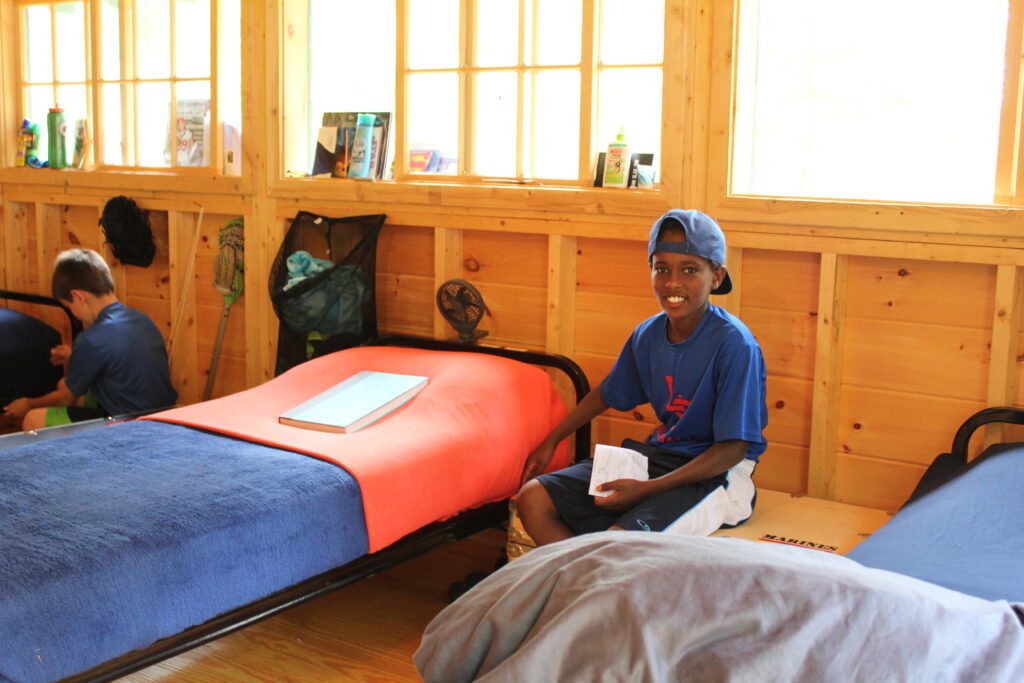
The whole thing took maybe fifteen minutes. We carried his bag to the cabin. I looked around at the bunks, said something about the view of the water, watched him start to figure out which bed he wanted, and I could feel him already starting to settle in even as I was still trying to hold on to the moment a little longer.
We hugged. I told him I loved him. He was already half-looking at the other kid across the cabin when I stepped back, and honestly, that was the best possible thing I could have seen. I walked to the car. I sat in it for a few minutes before I drove away, mainly because I just wasn’t ready to trade that feeling for the highway yet!
What Was Happening After I Left
This is the part I’ve pieced together from what he’s told me since, and from reading through the family guide more carefully than I did before his first summer. After I drove away, he unpacked, did a walk of the grounds with his counselor so he knew where everything was, like the waterfront, the Lodge, and the trails.
And then someone started a pickup soccer game and he played in it. Just like that, he was in it.
The Cubs program that he was part of as a first-time camper added some extra structure underneath all of it. More check-ins, staff specifically watching for boys who needed a little more time to find their footing. I didn’t know about that layer when I dropped him off, but learning it existed afterward made me feel like I’d left him in exactly the right hands.
By Dinner
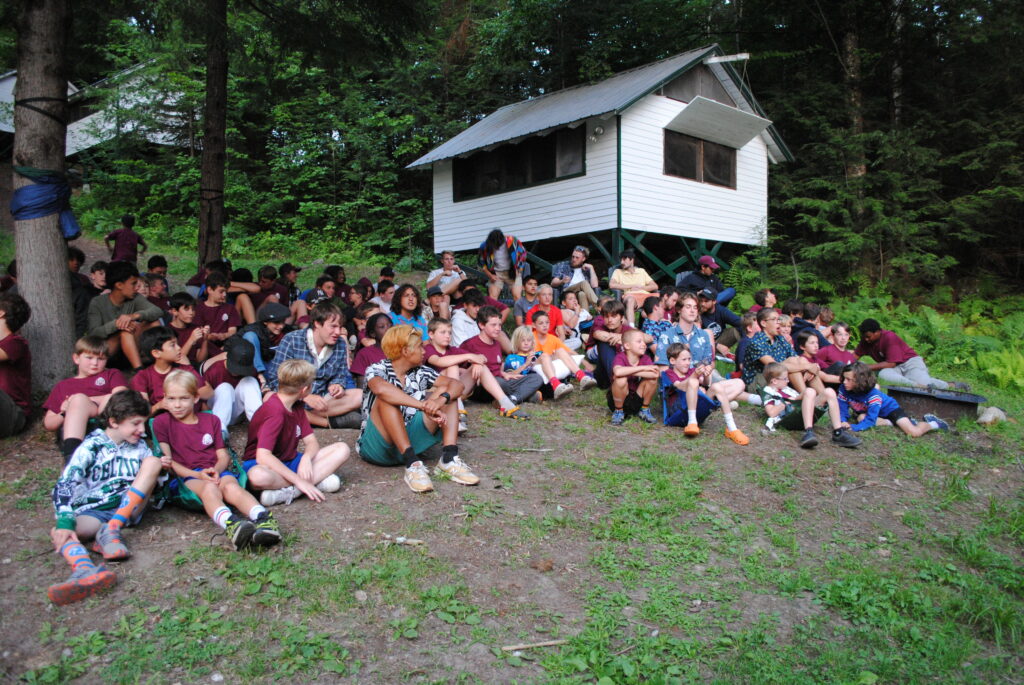
I thought about him a lot that first evening. I imagined the Lodge at dinner, the long tables, the noise of the whole camp in one room. He’d mentioned the names on the walls afterward, all the boys going back to 1926, painted in small letters, every summer.
By the end of that first week, he had learned what those names meant, and he told me one of the best parts was knowing that all those names had sat in the same Lodge, eaten the same meals, done the same activities. What surprised me most about Birch Rock was how quickly he started to feel like he was part of something that was already there, that had been there long before him, and would keep going after.
I drove home that first day, not knowing how the afternoon had gone. I had no idea how dinner was, whether he’d slept okay, whether the homesickness would come, and how bad it would be.
The Part About Homesickness
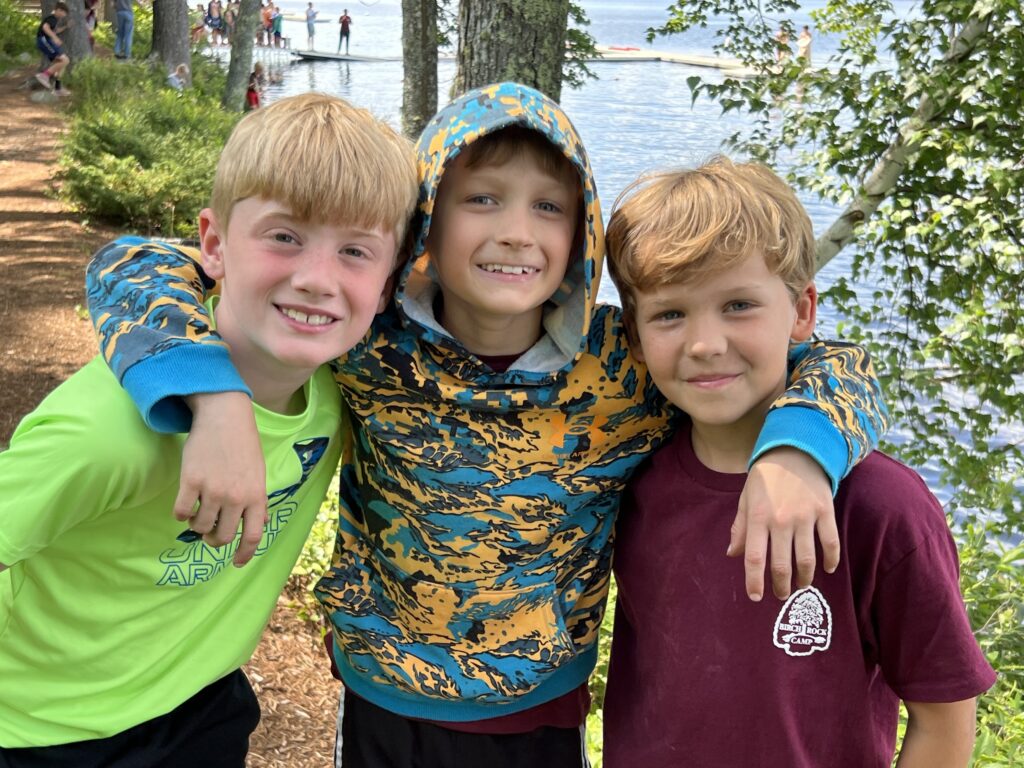
I want to say something about this because it was the thing I worried about most and the thing I felt most helpless about from a distance.
He did get homesick. Not the first night, but the second. His counselor noticed before he said anything, apparently. That’s what he told me afterward, that he hadn’t had to bring it up, that someone had already checked in. They kept him moving, gave him something to look forward to the next morning. By day four, he’d stopped thinking about home in that uncomfortable way and started thinking about what was happening in front of him instead.
I don’t think there’s a way to prevent homesickness. I don’t think that’s even the goal. What I’ve come to understand is that the question is really about how it gets handled, and whether your kid is in a place where someone is paying attention. For that part, I’d read the family guide before you go. It covers what the first few days usually look like and what the camp recommends about contact from home during the adjustment period. It helped me understand what my role was, which was mostly to stay calm and trust the place.
Once you’ve been there, even for fifteen minutes, the trusting part comes pretty naturally!